HomeBisnisDigital Twin in Mining: From Data Chaos to Command Clarity

At the heart of every large mining operation is a command center. This is where decisions get made — where supervisors track fleet movements, monitor production targets, and manage safety across a site that might span dozens of kilometers.

For decades, this job has relied on radios, spreadsheets, and flat satellite maps. It’s a system held together more by experience and intuition than by real-time intelligence. And while it has worked — after a fashion — it has always left significant value on the table.

Digital Twin is changing what a mining command center can actually do.

The Limits of a Flat Map

A satellite view of a mining site tells you where things are. It doesn’t tell you why they’re there, where they’re headed, or whether something is about to go wrong.

That distinction matters enormously in a dynamic environment. An open-pit mine is constantly evolving — benches are cut, roads are extended, haul routes shift as extraction progresses. A static overhead image captures a moment in time. A Digital Twin captures continuous reality.

The difference in decision-making quality that flows from these two approaches is significant.

3D Intelligence, Real-Time Awareness

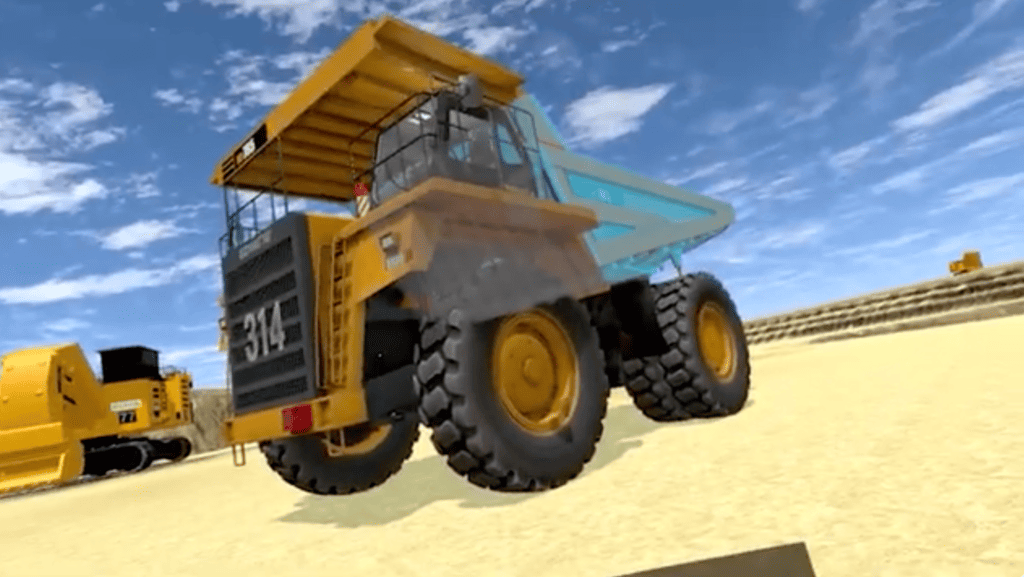
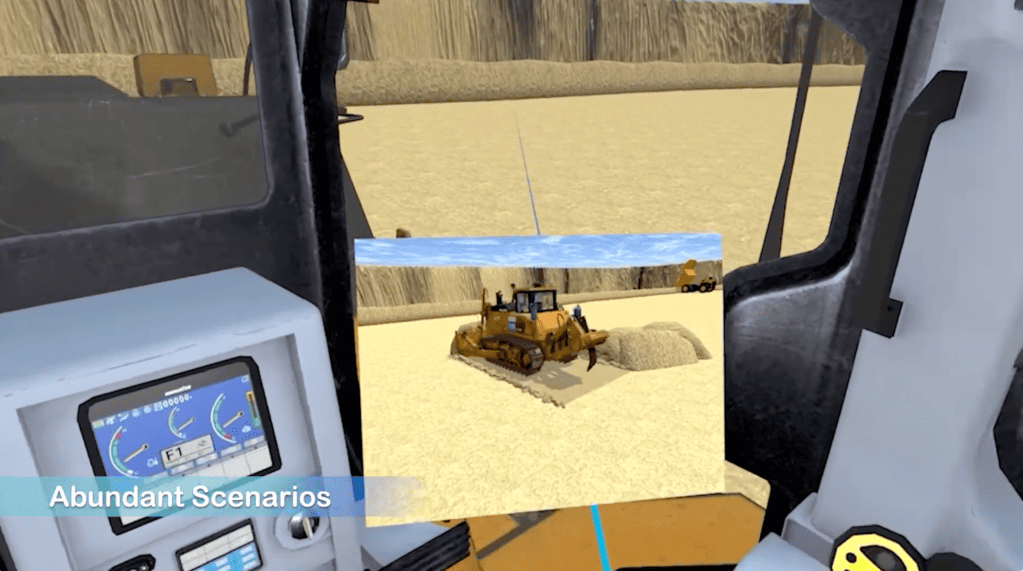
A Digital Twin of a mining site is a fully rendered, continuously updated 3D model of the operation. Supervisors don’t just see where trucks are — they see how they’re moving, how fast, where congestion is forming, and which routes are becoming safety concerns.

Color-coded overlays make this information instantly readable. Road segments with traffic moving at optimal speed appear green. Slowdowns appear yellow. Dangerous conditions appear red. A supervisor scanning the dashboard can assess the entire site status in seconds — and act on it just as quickly.

This is what replaces guesswork with informed decisions. And in an industry where a single shift represents enormous revenue potential, informed decisions compound quickly.

Predictive, Not Just Reactive

Command centers operating on traditional methods are, by nature, reactive. They respond to problems after they’ve occurred. A truck breaks down; they dispatch a replacement. A road becomes impassable; they reroute traffic. Each response takes time, and time in mining is money.

Digital Twin shifts the posture from reactive to predictive. By analyzing patterns in real-time and historical data, the system can flag early indicators of potential problems — an equipment telemetry reading drifting out of normal range, a road segment showing wear patterns consistent with upcoming failure, a vehicle cluster forming that will create congestion within the next 20 minutes.

The command center acts before the problem materializes. Downtime is prevented. Production continues. Costs stay down.

Audit-Ready by Default

Mining operations carry heavy compliance and reporting obligations. Incidents need to be documented. Inspections need to be supported with data. Regulatory requirements need to be met consistently.

A Digital Twin makes this substantially easier. Every state the system has recorded is timestamped and retrievable. If an incident occurs, the exact sequence of events can be reconstructed from the data. If an auditor requests documentation, it’s available — complete, accurate, and organized.

This isn’t just a compliance advantage. It’s a protection against liability, a tool for continuous improvement, and a foundation for building the institutional knowledge that makes operations more resilient over time.

The Mining Industry Is Ready

The mining sector has always been pragmatic about technology adoption. New tools earn their place by delivering measurable results — not by being novel or impressive. Digital Twin has cleared that bar.

The evidence from early adopters is compelling: faster decisions, reduced operational risk, fewer unplanned outages, and productivity gains that justify the investment many times over.

For mining companies still running their command centers on flat maps and radio check-ins, the upgrade path is clear. The technology is proven, the ROI is documented, and the competitive advantage of moving first is real.

At the heart of every large mining operation is a command center. This is where decisions get made — where supervisors track fleet movements, monitor production targets, and manage safety across a site that might span dozens of kilometers.

For decades, this job has relied on radios, spreadsheets, and flat satellite maps. It’s a system held together more by experience and intuition than by real-time intelligence. And while it has worked — after a fashion — it has always left significant value on the table.

Digital Twin is changing what a mining command center can actually do.

The Limits of a Flat Map

A satellite view of a mining site tells you where things are. It doesn’t tell you why they’re there, where they’re headed, or whether something is about to go wrong.

That distinction matters enormously in a dynamic environment. An open-pit mine is constantly evolving — benches are cut, roads are extended, haul routes shift as extraction progresses. A static overhead image captures a moment in time. A Digital Twin captures continuous reality.

The difference in decision-making quality that flows from these two approaches is significant.

3D Intelligence, Real-Time Awareness

A Digital Twin of a mining site is a fully rendered, continuously updated 3D model of the operation. Supervisors don’t just see where trucks are — they see how they’re moving, how fast, where congestion is forming, and which routes are becoming safety concerns.

Color-coded overlays make this information instantly readable. Road segments with traffic moving at optimal speed appear green. Slowdowns appear yellow. Dangerous conditions appear red. A supervisor scanning the dashboard can assess the entire site status in seconds — and act on it just as quickly.

This is what replaces guesswork with informed decisions. And in an industry where a single shift represents enormous revenue potential, informed decisions compound quickly.

Predictive, Not Just Reactive

Command centers operating on traditional methods are, by nature, reactive. They respond to problems after they’ve occurred. A truck breaks down; they dispatch a replacement. A road becomes impassable; they reroute traffic. Each response takes time, and time in mining is money.

Digital Twin shifts the posture from reactive to predictive. By analyzing patterns in real-time and historical data, the system can flag early indicators of potential problems — an equipment telemetry reading drifting out of normal range, a road segment showing wear patterns consistent with upcoming failure, a vehicle cluster forming that will create congestion within the next 20 minutes.

The command center acts before the problem materializes. Downtime is prevented. Production continues. Costs stay down.

Audit-Ready by Default

Mining operations carry heavy compliance and reporting obligations. Incidents need to be documented. Inspections need to be supported with data. Regulatory requirements need to be met consistently.

A Digital Twin makes this substantially easier. Every state the system has recorded is timestamped and retrievable. If an incident occurs, the exact sequence of events can be reconstructed from the data. If an auditor requests documentation, it’s available — complete, accurate, and organized.

This isn’t just a compliance advantage. It’s a protection against liability, a tool for continuous improvement, and a foundation for building the institutional knowledge that makes operations more resilient over time.

The Mining Industry Is Ready

The mining sector has always been pragmatic about technology adoption. New tools earn their place by delivering measurable results — not by being novel or impressive. Digital Twin has cleared that bar.

The evidence from early adopters is compelling: faster decisions, reduced operational risk, fewer unplanned outages, and productivity gains that justify the investment many times over.

For mining companies still running their command centers on flat maps and radio check-ins, the upgrade path is clear. The technology is proven, the ROI is documented, and the competitive advantage of moving first is real.
Related Post

Scroll to Top