Hot work covers tasks that produce heat, sparks or flames, such as welding, cutting, grinding and brazing. These tasks are common in construction, manufacturing, maintenance and shipyards. They are also a recognised cause of workplace fires, because sparks and hot metal can travel well beyond the work area and ignite nearby materials. This article explains the main fire prevention controls for hot work and how VR training can help workers apply them.
What Counts as Hot Work
Hot work generally includes any activity that can create a source of ignition. Common examples are:
- arc and gas welding
- oxy-fuel and plasma cutting
- grinding and abrasive cutting
- brazing and soldering
- thermal spraying and torch-applied roofing
Each of these can produce sparks, molten metal, hot slag or hot surfaces that can start a fire.
How Hot Work Causes Fires
Fires from hot work usually start in one of these ways:
- sparks or slag landing on combustible materials such as wood, paper, cardboard, packaging or fabric
- heat conducted through metal walls, pipes or beams to materials on the other side
- ignition of flammable vapours, gases or dust in the area
- smouldering material that ignites after the work has finished and workers have left
The last point is important. A fire may not appear until some time after the hot work has stopped.
Key Fire Prevention Controls
Hot work safety is usually managed through a set of controls defined in site procedures.
Hot Work Permit
Many workplaces require a hot work permit before work begins. The permit process confirms that the area has been checked, precautions are in place and responsibilities are assigned. It typically records the location, the type of work, the time period, the precautions taken and the names of the people involved.
Area Preparation
Before work starts, the area should be prepared:
- remove combustible materials from the work area, or cover them with suitable fire-resistant blankets
- check for flammable liquids, gases and dust, and test the atmosphere where required
- cover openings in floors and walls through which sparks could pass
- check the other side of walls and floors where heat could be conducted
The distance to be cleared around the work is set by site procedures and applicable standards.
Fire Watch
A fire watch is a person assigned to watch for fires during the hot work and for a period after it ends. The fire watch should have a suitable fire extinguisher, know how to raise the alarm and have no other duties that would distract them. The length of the post-work watch is defined in site procedures.
Fire Extinguishers
Suitable portable fire extinguishers must be available at the work location. Workers and the fire watch should know which extinguisher type to use and how to use it. In Indonesia, requirements for portable fire extinguishers are set out in Minister of Manpower Regulation No. PER.04/MEN/1980.
Personal Protective Equipment
Workers carrying out hot work need PPE suitable for the task, such as welding helmets or face shields, protective gloves and flame-resistant clothing.
Why These Controls Are Missed
Hot work controls involve several steps and several people. Common gaps include:
- starting work before the permit is fully completed
- missing combustible materials that are out of sight, such as behind a wall or below a floor grating
- leaving the area immediately after the job without a post-work fire watch
- not having the right extinguisher at the work location
These gaps are difficult to practise in real conditions, because hot work cannot be safely carried out near combustible materials for training purposes.
How VR Training Helps
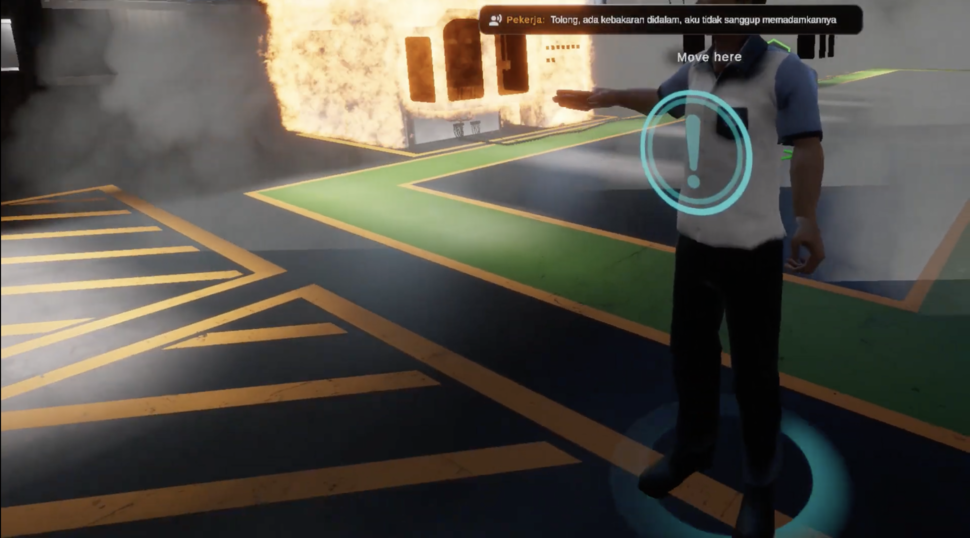
VGLANT lists hot work among its VR safety modules, alongside fire evacuation and response, work at height and first aid. VR training allows workers to practise hot work preparation and fire prevention in a simulated environment, without real sparks, flames or fire risk.
Depending on the scenario, VR training can be used to practise:
- identifying combustible materials and ignition hazards in a work area
- completing preparation steps before work begins
- recognising when conditions are not safe to start
- responding to a small fire with a suitable extinguisher
- carrying out fire watch duties during and after the work
VGLANT describes its scenarios as randomised and its training as zero risk. Hazards can appear in different places in different sessions, so workers must check the whole area rather than rely on memory.
Recording Performance
VGLANT’s platform records metrics such as task duration, reaction time and actions taken. Supervisors can see whether workers identified hazards, completed preparation steps and responded correctly to a fire.
VGLANT’s bespoke services convert existing SOPs into VR scenarios, so the training can follow the organisation’s own hot work permit process and precautions.
Limits
VR training does not replace supervised practical training, welding certification or the hot work permit system itself. It supports these by giving workers more practice in recognising hazards and following procedures.
Summary
Hot work fires can be prevented through permits, area preparation, fire watch, suitable extinguishers and PPE. VR training gives workers a safe way to practise these controls and gives supervisors a record of each attempt. Organisations interested in VR hot work training can contact VGLANT for a demonstration.